
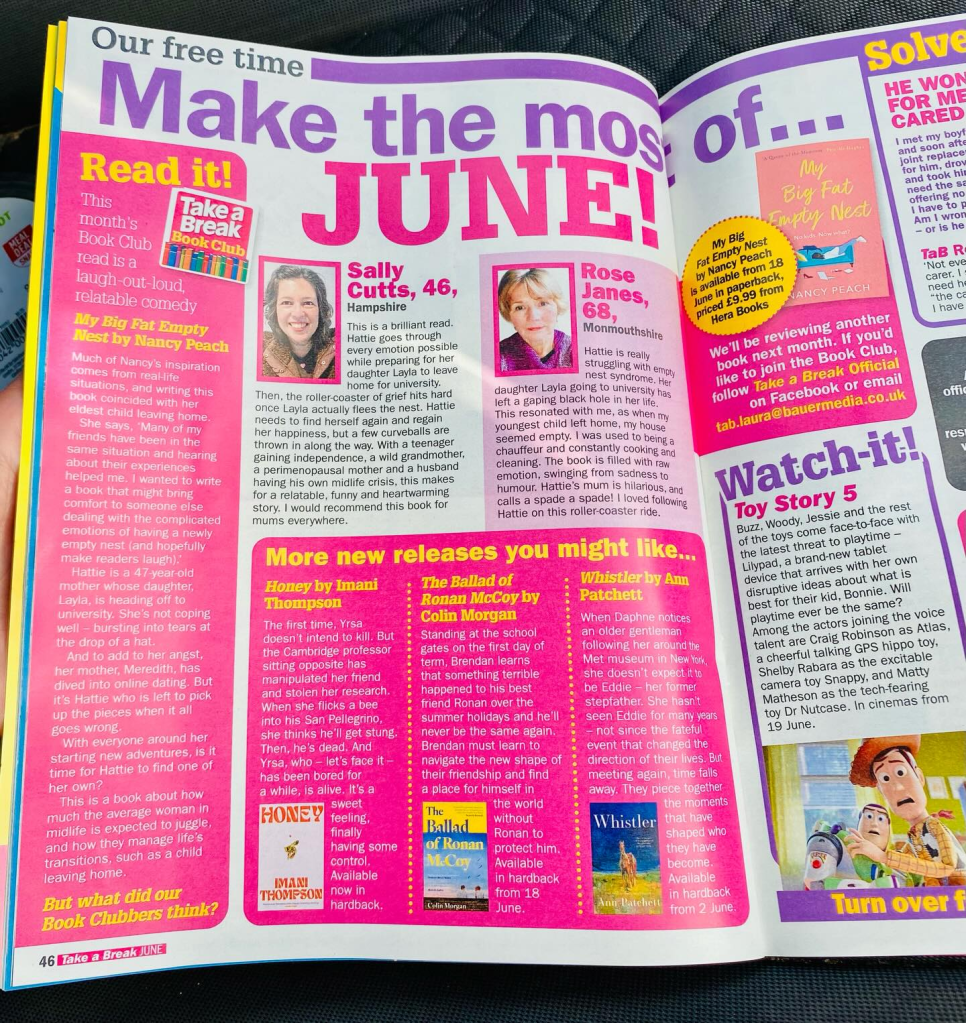
Take a Break magazine were kind enough to feature My Big Fat Empty Nest as their book club choice for June and below are some of the questions they asked before running the article.
How did you come up with the storyline for the book? Do you remember where you were or what you were doing when you got those initial sparks? Any particular inspirations?
Like most authors, much of my inspiration comes from real life situations and experiences. I enjoy looking at the day to day struggles of the Sandwich Generation and finding some humour in them – being at that time of life myself means that writing about it is a therapy of sorts. The two books preceding Empty Nest were loosely based on what was happening to me and what I could see around me (The Mother of All Problems is about juggling caring for small children whilst looking after a parent who has early onset dementia, and Hot Mother is about the menopause) and my editor specifically suggested writing an Empty Nest book at a time that just happened to coincide with my eldest child leaving home. Many of my friends have been in the same situation and I know that hearing about their experiences has helped me, so I guess I wanted to pay it forward, writing a book that might help someone else dealing with the complicated emotions of having a newly empty nest (and hopefully making them laugh in the process).
How did you create the characters? Are any of them particularly important to you? If so why?
Meredith, Hattie’s mother, was my favourite character to write. She is in her mid-seventies, widowed after a decade of caring for her husband, and newly released onto the pensioner dating scene (with a level of enthusiasm that slightly baffles her daughter). Meredith is how I like to imagine myself at that age – determined to enjoy herself, absolutely formidable, and a little bit bonkers.
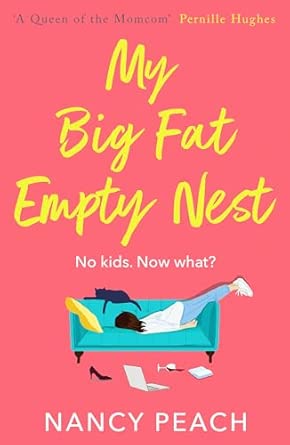
For you, what are the book’s themes, and are these topics that particularly resonate with you?
The societal roles of a middle-aged woman are complicated and numerous, and it still astonishes me how much your average woman in midlife is expected to do; caring for elderly parents; caring for children who may have technically reached adulthood but still seem to require a lot of input; being there for friends who are often going through their own crises; bringing in an income; running the household; helping out in the wider community, and being a supportive wife and partner. It’s a lot. But despite that, when one or more of those roles changes or disappears (e.g. when your child leaves home) it can leave you feeling rudderless and lost. The other things don’t necessarily fill that gap automatically. I wanted to take an honest look at how women manage these transitions in life and offer some words of hope and solidarity during what is potentially quite a traumatic period.
I also very much wanted to write about the booming online pensioner dating scene (because it is an absolute riot according to parents of friends who shall remain nameless!) and the world of community libraries, one of the last remaining free spaces where people from all walks of life can pitch up and broaden their horizons through training, research, or simply reading a good fiction book. Like most authors I love a library, and I am desperately worried about holding onto them as a future resource in the face of huge pressures on funding.
Do you have a particular connection to the events or themes of the novel that informed or shaped the book in any way?
I’ve probably covered this in my other answers, but this does provide me with an opportunity to say that the awful golf wives Hattie meets through her husband’s new hobby are entirely fictional and not based on anyone I know. At all. Honest.

